Plant Protein Swap Linked With Healthier Aging and Lower Dementia Risk
Studies link plant focused diets with fewer age related health deficits and lower Alzheimer’s risk, though they don’t prove diet alone prevents disease.
Small shifts toward plant protein are linked with healthier aging in several observational studies, but the findings don’t establish that a specific food swap will prevent disease or extend an individual’s life. The evidence points to a broader pattern: diets rich in vegetables, beans, whole grains, fruit, nuts and seeds are associated with fewer age related health problems and better cognitive outcomes.
Protein source and age related health
A study of more than 400,000 people found that replacing 3% of calories from animal protein with plant protein was associated with a 10% lower risk of death from any cause. Replacing the same share of calories from egg protein was associated with a reduction of more than 20%; the reported association was larger than for replacing red meat protein. These are population level associations, not evidence that a swap guarantees extra years of life.
A separate study examined healthy aging, defined as maintaining the abilities that support well being in older age. It assessed a range of health indicators, including functional limitations, mental health, disease, self reported health and vitality, and use of health services. Higher vegetable protein intake was associated with fewer accumulated health deficits. Even replacing 1% of calories from animal protein with vegetable protein was linked to significantly less deficit accumulation.
Researchers accounted for fat intake, and the association remained. That suggests the finding may not be explained by fat alone, though it doesn’t reveal whether the difference comes from reducing animal foods, adding plant foods, or both. These studies track dietary patterns and health; they can identify relationships, but can’t by themselves show cause and effect.
Diet quality matters
Plant based eating isn’t automatically healthful. A vegan diet can still rely heavily on sugary foods, refined flour and processed oils, with few vegetables or whole foods. The distinction matters: evidence discussed in a review of diet and skin aging concerns a whole food, plant based pattern, not simply avoiding animal products. The review proposed possible links involving antioxidant activity, telomeres and exposure to compounds associated with aging, but these ideas should not be read as proof that a particular diet reverses skin aging.

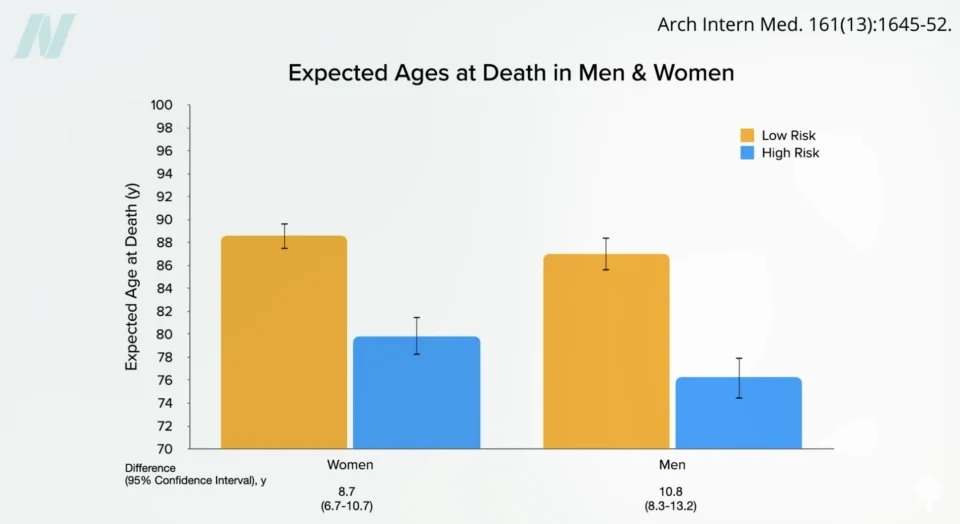
Long term observations of Seventh day Adventists in Loma Linda, California, offer another view of dietary patterns and longevity. The community has been described as having one of the longest life expectancies among studied populations. Average life expectancy for vegetarian men and women was reported at about 83 and 86 years, respectively—roughly 10 and 6 years longer than the California population cited in the research. People who ate a vegetarian diet that included nuts, exercised, had a lower body weight and never smoked lived about 9 to 11 years longer than people without those habits. Because several behaviors cluster together, these figures can’t isolate the effect of diet.
Longevity also needs to be considered alongside quality of life. The research cited did not directly measure overall well being, but vegetarian Adventists were reported to use fewer medications and have fewer x ray examinations, surgical procedures and overnight hospital stays. Their lower prevalence of some chronic diseases may also matter to how those additional years are experienced.
What the research says about brain health
Diet is also being studied in relation to cognitive decline and Alzheimer’s disease. One approach, the MIND diet, emphasizes plant foods, especially berries and leafy greens, while limiting animal foods and foods high in saturated fat. In the research described, strict adherence was associated with a 53% lower risk of Alzheimer’s disease; moderate adherence was associated with a reduction of about one third. Participants with high adherence also had cognitive function comparable to that of someone 7.5 years younger. These results are associations, not proof that the diet prevents Alzheimer’s.
Other studies cited in the source found that people who ate meat, including poultry and fish, were more than twice as likely to develop dementia as vegetarian participants; analyses accounting for past meat consumption reported a threefold association. Such comparisons can be affected by differences in health, lifestyle and other factors, so they don’t show that meat itself caused dementia.
Several possible mechanisms are under study. Plant rich eating patterns may support the body’s defenses against oxidative stress and inflammation. Berries contain antioxidants, and people avoiding meat have been observed to have more anti inflammatory compounds and lower levels of markers such as C reactive protein. Diets high in animal protein, saturated fat and refined sugar, and low in plant foods, may also affect stress hormones. These proposed pathways help explain researchers’ interest, but they don’t establish a direct route from a particular food to Alzheimer’s.
Advanced glycation end products, or AGEs, are another area of investigation. They form in foods and can increase with high temperature cooking. The cited research reported about 1,000 kilounits of AGEs in boiled chicken breast, compared with 9,000 when broiled. Foods such as whole grains, beans, fruits and vegetables tend to have lower AGE content, while many grilled, fried, roasted or broiled meats have more. Researchers are studying whether dietary AGEs contribute to age related conditions; the evidence does not show that avoiding them alone prevents cognitive decline.
A practical way to read the findings
Diet is only one part of brain health. Sleep, rest and physical activity matter too. In the cited research, daily brisk walks were associated with a 40% lower risk of later Alzheimer’s, while smoking was linked with higher dementia risk. These findings also describe associations and don’t predict an individual’s outcome.
The consistent signal is a dietary pattern: more plant foods, particularly greens, beans and berries, and less added sugar, salt, saturated fat, highly processed food and animal products. That’s a useful area to discuss with a doctor or dietitian, especially when managing health conditions or considering a major change in eating. The research supports taking food patterns seriously while leaving room for individual needs and for stronger studies to clarify cause and effect.