Vitamin D in Older Adults: Benefits, Deficiency Risks and Food Sources
Age can reduce vitamin D production and absorption. Learn about its roles, food sources, supplement evidence and when testing may be useful.
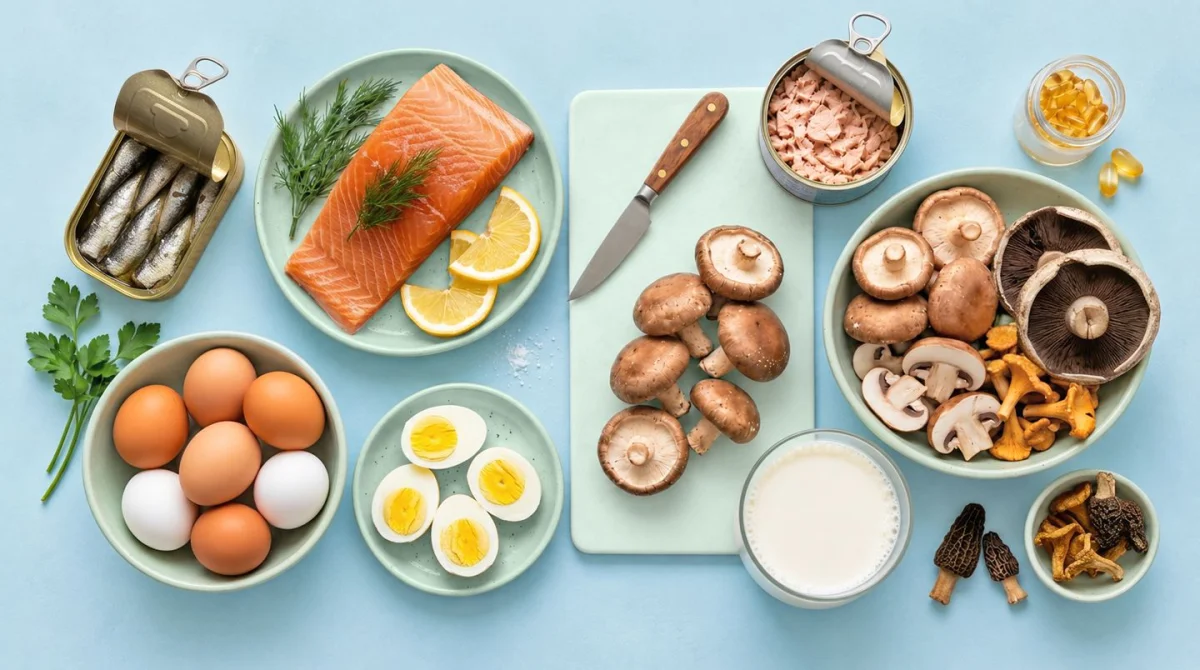
Vitamin D supports bone renewal and muscle function, but older adults may make less of it in their skin and may be less able to process it. The practical concern is that low levels can contribute to weaker bones and muscles. Yet the evidence for its wider effects, including on mood and memory, is less settled, and taking more isn’t automatically better.
What vitamin D does
Vitamin D helps the body absorb calcium, which is needed to build and maintain bone. Bones are continually renewed as old tissue is replaced; without enough vitamin D and calcium, that process can be impaired. Together, these nutrients help protect against osteoporosis, in which bones become thin and fragile.
Vitamin D also has a role in muscle function. Bess Dawson-Hughes, a bone metabolism researcher at Tufts University, says deficiency or insufficiency can contribute to weakness. Muscle strength and balance both matter for fall risk, though the article does not establish that supplements prevent falls for everyone.
There are other potential effects. Vitamin D is active in immune cells and may help regulate inflammation. It also acts in brain tissue, and lower blood levels have been associated with more symptoms of depression and anxiety. Some research has linked vitamin D with memory and thinking. These findings describe possible connections; they don’t show that supplements prevent or treat mood or cognitive conditions.
Why levels may fall with age
Skin makes vitamin D after exposure to ultraviolet B rays. Older skin has fewer of the building blocks needed for this process, so it tends to produce less vitamin D from the same sunlight than younger skin. Melanin also reduces production, meaning people with darker skin tones may make less from a similar amount of sun exposure.
Time outdoors can decrease with age, and in parts of the United States, winter sunlight may be too weak for skin to produce vitamin D for months. Sunscreen limits production too, although people may use it to protect skin, including after treatment for skin cancer.
The kidneys help convert vitamin D into a form the body can use, and that process can become less efficient with age. The body may also use vitamin D somewhat less efficiently, Dawson-Hughes says, though she describes this change as modest. Problems absorbing nutrients can also affect vitamin D levels.
Food sources and supplements
Foods naturally rich in vitamin D are relatively few. A 3-ounce serving of canned salmon contains about 490 international units (IU), while wild salmon can provide up to 1,000 IU, according to dietitian Elisabetta Politi. Three ounces of cooked swordfish has about 570 IU; the same amount of raw mackerel has 250 IU and sardines have 160 IU. Half a cup of white mushrooms exposed to ultraviolet light provides about 370 IU. One egg yolk has about 40 IU.
Fortified foods can add smaller amounts. A cup of fortified cow’s milk typically has about 100 to 120 IU, and fortified soy, almond and oat milks provide about 100 to 150 IU. Vitamin D is fat-soluble and is absorbed along with dietary fat. Fatty fish already contains fat; for lower-fat sources, having them with a meal that includes some fat may support absorption.
Food alone may not meet everyone’s needs, and the source article describes supplements as a common way to fill the gap. Dawson-Hughes says hard-form pills are better absorbed with a meal or snack containing fat; oil-based capsules are absorbed well. She cites 800 to 1,000 IU as a range that works for most people, but individual needs can differ, especially when absorption is impaired. This is not a personal dosing recommendation: discuss supplements with a doctor or pharmacist, particularly if you have a health condition or take other products.
Vitamin D is stored in body fat and the liver, so excessive intake over time can become harmful. The source advises that most adults not exceed 4,000 IU a day and says typical 800 to 1,000 IU supplements are not expected to cause toxicity, even alongside vitamin D-rich foods. It also reports that D3 generally raises and maintains blood levels better than D2, and that regular daily or weekly intake is preferable to large, infrequent doses, which have been linked to more falls and fractures.
Cod liver oil contains vitamin D, but Politi cautions that it is also high in vitamin A. Excess vitamin A over time has been linked to greater bone loss and fracture risk in some older adults.
Recommended amounts and testing
The recommended daily amount listed in the source is 600 IU (15 micrograms) for adults up to age 70 and 800 IU (20 micrograms) for those over 70. Significant deficiency can cause bone pain, muscle weakness or cramps, and difficulty walking or climbing stairs. Symptoms may not appear until deficiency is substantial.
Routine blood testing isn’t generally considered necessary for every older adult, Dawson-Hughes says. Testing may be useful when there’s a reason to suspect deficiency, such as osteoporosis or a condition that interferes with nutrient absorption. If symptoms, bone health concerns or absorption problems are part of the picture, a clinician can help decide whether testing or a supplement is appropriate.