Hidradenitis Suppurativa: Common Sites and What to Know
HS often affects skin folds where sweat and friction are common. Learn which areas may be involved and why a dermatologist can help.
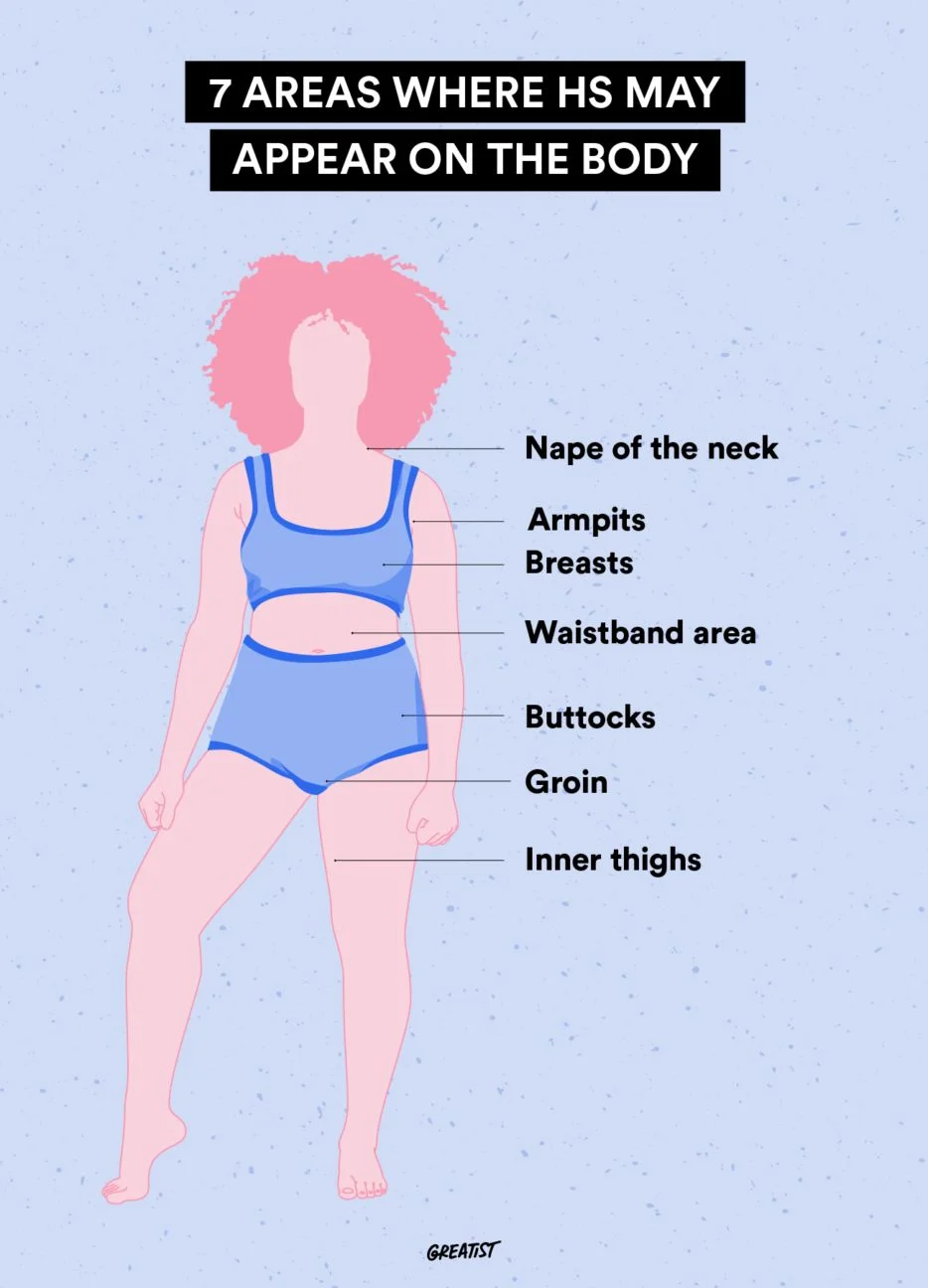
Hidradenitis suppurativa (HS) can affect several areas of the body, especially places where skin rubs against skin or clothing. Underarms, breasts, the groin, inner thighs, buttocks, the back of the neck and the waist are among the areas where it may appear. Recognizing this pattern can help people seek an assessment, though location alone can’t confirm a diagnosis.
HS is a chronic inflammatory skin condition. It can cause painful, boil-like lumps, and sometimes tunnels form beneath the skin and connect affected areas. These lumps can become inflamed, and infections may occur, but HS itself isn’t an infection. It can also affect comfort and self-esteem. Research has linked the condition with changes in self-esteem.
The precise cause remains unknown. Genetic, environmental and hormonal factors may contribute. HS often occurs in places with hair follicles and apocrine glands, which produce a type of sweat. Friction and irritation may aggravate symptoms in some people, but they don’t explain every case.
Underarms and breasts
The underarms are a frequent site of HS. They contain many hair follicles and apocrine glands, and the area can be exposed to sweat and rubbing. Skin-on-skin contact, clothing that chafes, shaving or waxing, and products that irritate the skin may add to discomfort or contribute to flares for some people. These factors aren’t proof that a bump is HS, and everyday skin irritation can have other causes.
HS may also affect the breasts, including the skin underneath them and, sometimes, the areola around the nipple. Bras and other clothing can rub against the skin, while warmth and moisture may build up in skin folds. The areola contains hair follicles and apocrine glands as well.
Hormones may have a role in HS, and researchers have examined possible links between sex hormones and breast-area symptoms. The connection needs more study, so a hormonal change by itself doesn’t establish why a lesion has appeared.
Groin and inner thighs
The groin and genital skin are also common locations. These areas have hair follicles and apocrine glands, and they may be exposed to sweat, friction from movement and rubbing from clothing. Hair removal can irritate the skin or affect follicles, which may complicate symptoms for some people.
The inner thighs share many of these conditions. Skin may rub against skin while walking or exercising, and clothing can chafe. As with other sites, friction is a possible contributor rather than a diagnosis or a complete explanation of HS.
Buttocks
HS can involve different parts of the buttocks, including the crease between them, the fold where the buttocks meet the backs of the thighs, and skin near the anus. Hair follicles and apocrine glands are present in the area. Pressure from sitting, along with moisture and friction, may also irritate affected skin.
Some studies have examined a possible association between HS and inflammatory bowel disease (IBD), which includes Crohn’s disease and ulcerative colitis. That research does not establish that one condition causes the other, and more evidence is needed to understand the relationship. The proposed link also doesn’t explain HS in any individual person.
Back of the neck and waist
HS is less often reported at the nape of the neck, but it can occur there. Collars, jewelry or other accessories may rub against the skin, and sweat can collect around hair follicles.
At the waist, skin folds or a tight waistband may create repeated friction. Lesions in this area may appear on the abdomen, back or sides. Their position can vary from person to person.
When to seek an assessment
A painful lump in one of these areas doesn’t necessarily mean HS; boils, ingrown hairs and other skin conditions can look similar. Recurrent lumps, drainage, scarring or connected areas under the skin are reasons to discuss the symptoms with a dermatologist. A clinician can assess the pattern and help determine whether HS or another condition is responsible.
Because HS is chronic and may progress, identifying it can help people understand their symptoms and discuss options for care. A dermatologist can also talk through ways to reduce irritation and manage flares in the context of a person’s skin and health history. The practical takeaway is to notice recurring symptoms and their locations, then seek a professional assessment rather than relying on appearance alone.


