Garry Kasparov’s Chess Career, Deep Blue Matches and Work With Young Players
The 2026 Hall of Fame inductee reflects on chess as a test of focus, his historic career and efforts to support the next generation.
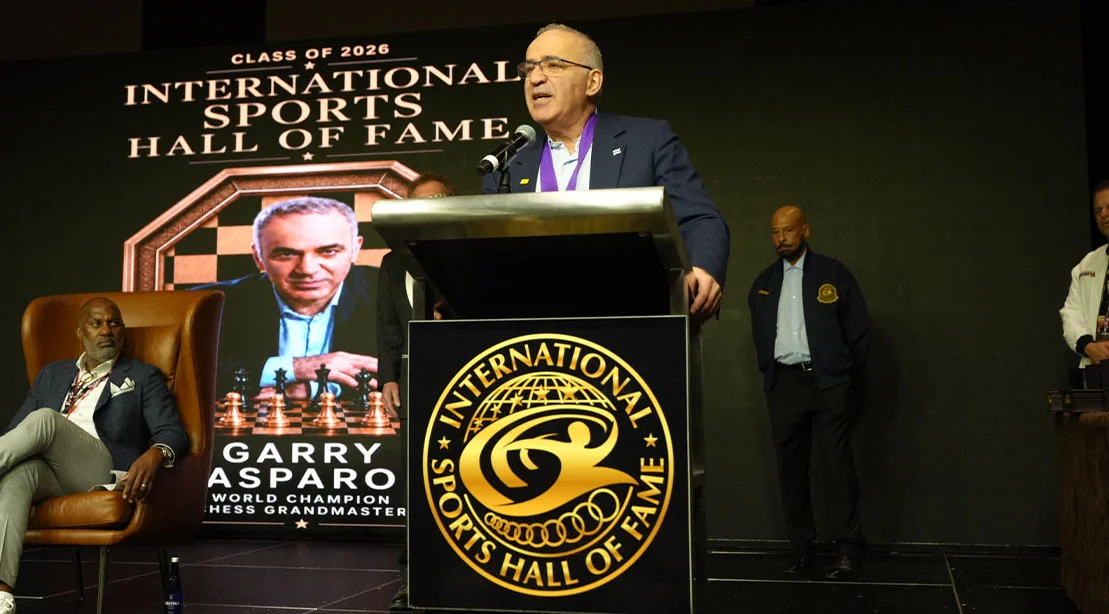
Garry Kasparov’s induction into the International Sports Hall of Fame’s Class of 2026 gave the former world chess champion a chance to make a case for chess as an athletic contest. For Kasparov, the game’s demands on concentration and endurance place it firmly among sports. His career offers a striking example: he became world champion at 22, held the world No. 1 ranking for more than two decades and later met IBM’s Deep Blue in matches that brought computer chess to a wide audience.
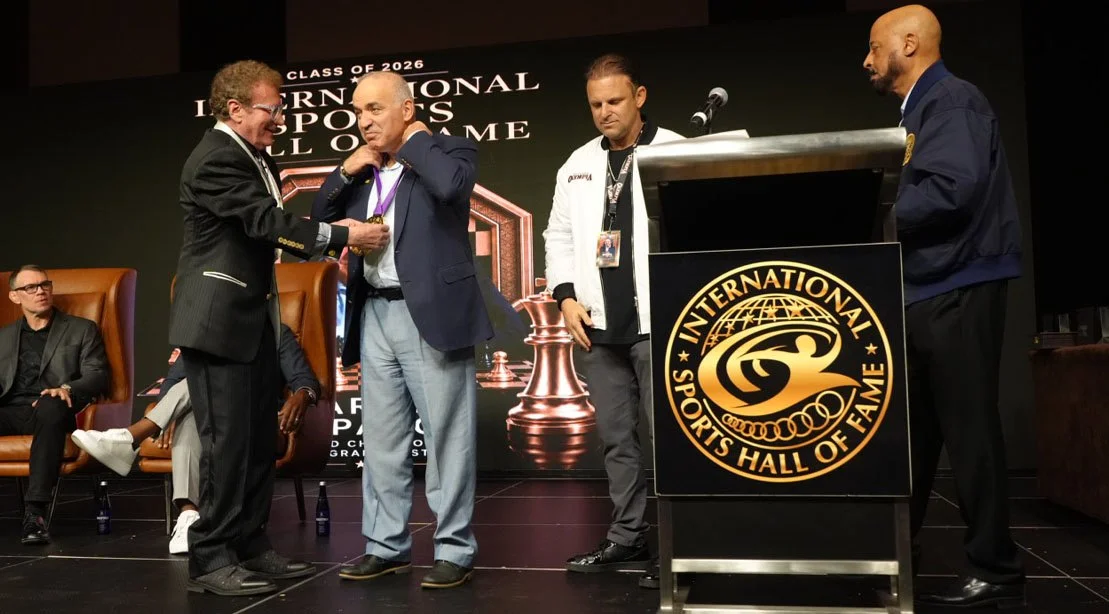
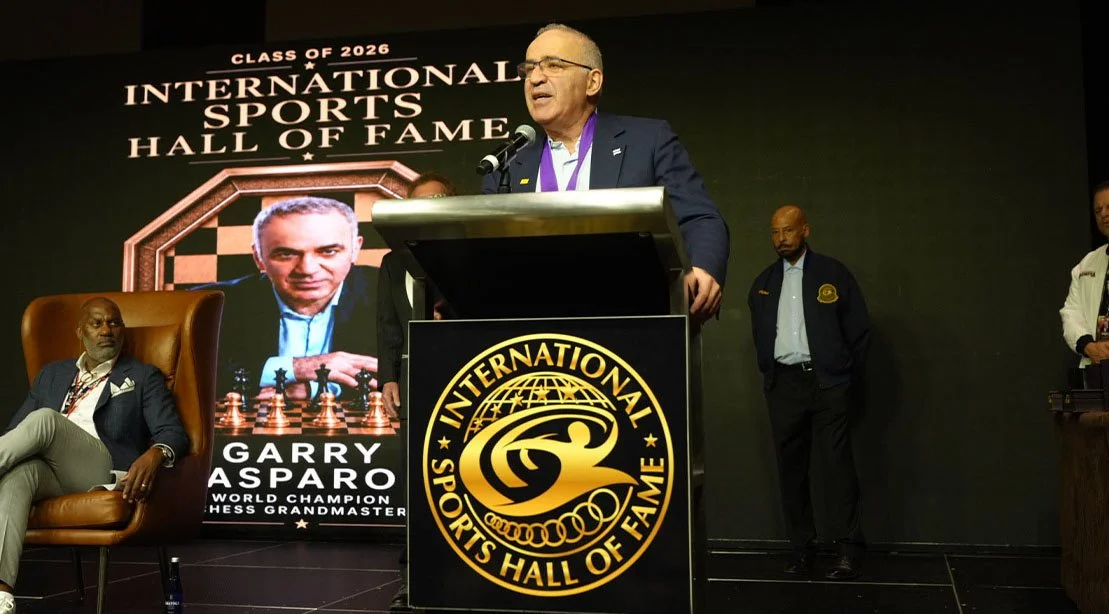
At the September 26 ceremony, Kasparov thanked the Hall of Fame for helping settle the question of whether chess qualifies as a sport. He joked that he didn’t resemble fellow inductee Dexter Jackson, a Mr. Olympia winner, but argued that mental ability is central to competition across athletics. “Chess is in many ways the purest expression of the mental focus and fortitude necessary to achieve greatness in just about any other sport,” he said.
From Baku to the world title
Kasparov was born in Baku in 1963, when the city was part of the Soviet Union and is now in Azerbaijan. He became interested in chess as a young child. His parents also enjoyed the game, and his father taught him its rules. After his father died in a car accident when Kasparov was seven, his mother supported his interest by enrolling him in a chess group at the Baku Young Pioneer Palace.
At 10, Kasparov entered an elite chess school run by former world champion Mikhail Botvinnik. Botvinnik recognized the boy’s strong memory and ability to work through complex sequences, and became an important mentor. Twelve years later, Kasparov defeated Anatoly Karpov to become the 13th World Chess Champion. At 22, he was the youngest player to reach that title.
Recalling the victory during his induction speech, Kasparov noted that Karpov was 34 at the time. The result, he said, convinced him he could “play a much bigger game.” His dominance continued: he held the official International Chess Federation (FIDE) world title from 1985 to 1993, then the Classical World Championship title until 2000. He remained world No. 1 from 1984 until retiring in 2005.
Kasparov reached a peak FIDE rating of 2851 in 1999. That mark stood as the highest in chess for more than a decade, until Magnus Carlsen surpassed it in 2013. Ratings offer one way to compare players’ results over time; Kasparov’s long run at the top also reflects how consistently he performed against elite competition.
Chess against a supercomputer
Kasparov’s matches with IBM’s Deep Blue added another dimension to his career. In 1996, he won their first six-game match, scoring 4–2. IBM upgraded the computer, and Deep Blue won the rematch in 1997 by 3.5–2.5. The result drew attention to how machines could analyze chess positions, while giving Kasparov firsthand experience of the changing relationship between human players and computer calculation.
Those matches also led him to explore computer science and questions beyond the chessboard. They remain a vivid point of reference in discussions about machines and human expertise, though the match results alone don’t answer broader questions about what computers can do in other settings.
Work that continues beyond competition
Since retiring from tournament chess, Kasparov has stayed involved in the game through events, mentoring and education. He helped launch the Grand Chess Tour, a series of international tournaments featuring highly ranked grandmasters, and continues to share views on championship matches and leading players. He has also returned to competitive play for special exhibitions, including matches with Viswanathan Anand in 2025 and longtime rival Veselin Topalov in 2026.
Kasparov founded the nonprofit Kasparov Chess Foundation in 2002. Its work centers on chess education and identifying young talent, with programs that include training camps, coaching clinics and digital learning platforms. At the induction ceremony, he said nearly every American grandmaster under 35 had taken part in the foundation’s programs. That is his account of the foundation’s reach; the speech did not provide a separate count or breakdown.
The ceremony also recognized Dexter Jackson, Forrest Griffin, Vitomir Maričić and the Harlem Globetrotters. Kasparov said he hoped the honor would draw attention to causes he supports, alongside celebrating his chess career. His induction therefore linked two parts of his public life: a record-setting competitive legacy and continued work connected to chess education and young players.
For readers following chess, the most tangible thread is that legacy of participation. Kasparov’s titles and Deep Blue matches made him one of the game’s defining figures, while the foundation and tournaments keep him connected to players coming up behind him. The full 2026 induction ceremony is available to watch on YouTube; more information about the Hall of Fame is at ishof.net.