Scientists Build Cell Like Systems in the Lab, but Defining Life Remains Difficult
A lab made cell like system can grow, divide and copy DNA, but it lacks key features of living cells. Researchers are still working out what counts as life.
Researchers can now assemble nonliving materials into systems that carry out several tasks associated with cells: taking in food, growing, copying genetic material and dividing. One recent example, SpudCell, completes a cell like cycle in the lab. But it cannot yet sustain all the functions of a natural cell, and scientists have no agreed definition of life to settle whether a system has crossed that boundary.
That distinction matters for two related areas of research. Some teams try to reconstruct how life might have begun on early Earth. Others build simplified cells with known components, aiming to understand how cells work and, eventually, to make useful products. The approaches differ, but both use construction as a way to ask what life requires.
SpudCell, developed by synthetic biologist Kate Adamala at the University of Minnesota, has drawn attention because it brings several functions together. The system can use food, grow, copy its DNA and divide. Adamala announced the result in July, describing a synthetic system that completes a full cell cycle. The research paper has not yet been peer reviewed or published in an academic journal, so the finding remains an early report.
Even by the researchers’ account, SpudCell is not a self sufficient living cell. It relies on a premade mixture of enzymes drawn from existing biological systems. It cannot produce its own protein making machinery, its full genome does not persist through more than a few generations, and it cannot evolve independently. The work is a notable assembly of cell functions, but it has not demonstrated a complete, self sustaining organism.
“The biggest thing that’s left to do, and it sounds simple, but it really is not, is to put all of it together,” Adamala said in an earlier interview. SpudCell is one attempt to do that. The wider field is still working out what “all of it” means.
What a minimal cell can do
Adamala works on what researchers call synthetic minimal cells: structures made from identified ingredients that perform selected tasks. They can have some, but not all, of the functions of natural cells. SpudCells are small membrane bound bubbles, with DNA or RNA inside. The genetic material provides instructions that can lead the system to produce proteins, much as genetic material does in a natural cell.
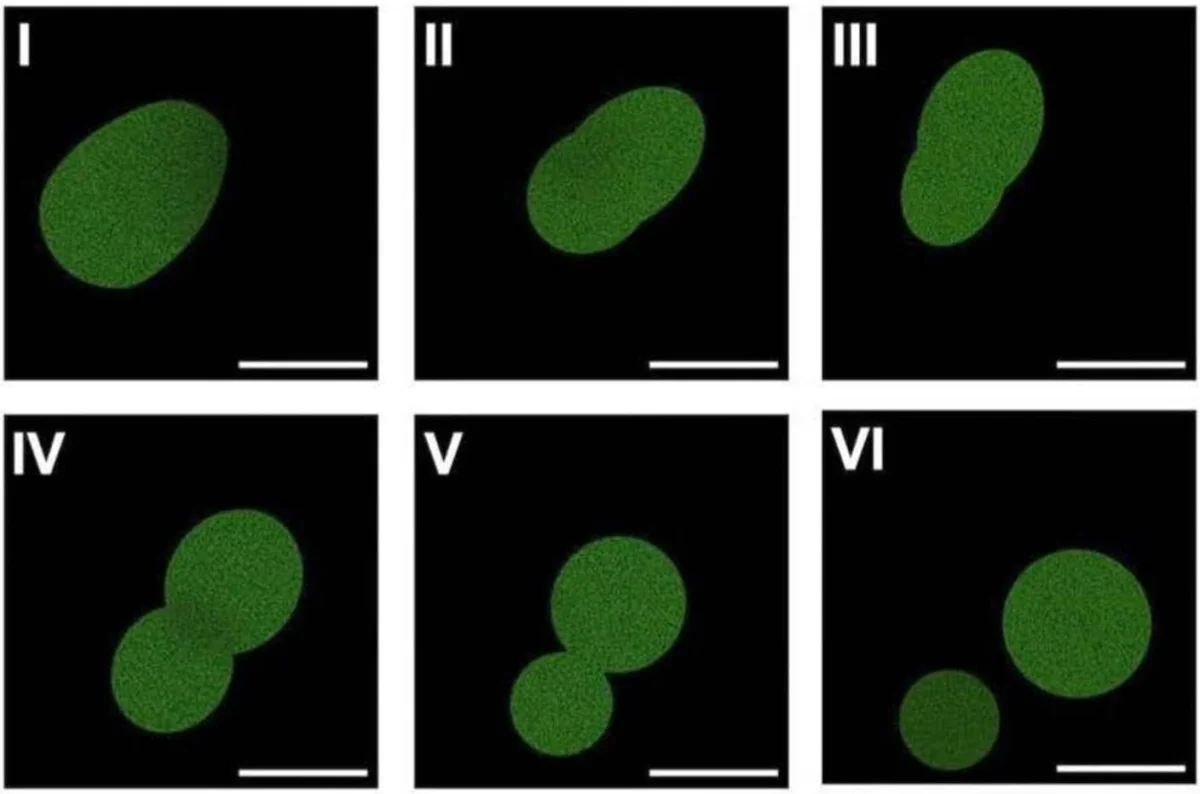
The membrane is made from lipids, fatty molecules that can form a boundary around the cell’s contents. That boundary helps separate internal reactions from the surrounding environment. In Adamala’s approach, the structures can also merge. If that ability can be developed for practical use, it might allow a synthetic system to interact with human cells or release products outside its membrane. A protein or other molecule that remains sealed inside a cell may have limited usefulness for medical or manufacturing purposes.
The SpudCell system uses about 90,000 genetic base pairs, along with a mixture of enzymes supplied in advance. The research team provides specialized food that allows the cells to grow. As the cell takes in food and its contents build up, a protein causes the membrane to bend inward. That indentation can deepen until the structure splits into two. The resulting cell can also take in food and grow.
The system’s feeding and division are linked. Its proteins help it use the supplied food, and continued growth contributes to the physical changes that lead to division. The researchers also made a SpudCell variant that used food more efficiently. When they mixed it with the original version, the more efficient variant consumed more of the available food and became more common. That result resembles competition and selection, a basic ingredient of evolution, but it does not amount to independent evolution over generations.
Adamala’s work starts with components that researchers can select, prepare or design. She can use DNA that has been printed or cloned, and proteins designed with computational tools. For SpudCell, the team started with a prepared collection of molecules, added chemical ingredients from a virus and from E. coli, and supplied lipids to form the membrane. This gives the researchers control over the starting materials and lets them test how specific components affect the system.
Knowing the ingredients is useful for a basic scientific reason: It may reveal which parts are necessary for particular cellular tasks and which are not. Natural cells contain many components that developed through long evolutionary histories. A simpler system can help researchers isolate the roles of individual parts and ask what a cell must have to perform a given function.
There are also possible applications, though they remain goals rather than established outcomes. Adamala has described using synthetic systems to produce chemicals now obtained from petroleum or to support future cancer treatments. Such work would need to show that a system can make a useful product reliably and safely. The current SpudCell result does not establish that it can treat disease or manufacture products at practical scale.
Adamala and a collaborator have started a nonprofit organization, Biotic, with the stated aim of making SpudCell an open source system that others can license for research. The broader prospect is that researchers could adapt a known set of components to produce specific molecules or perform defined tasks. For now, the scientific work is centered on demonstrating and improving the system’s functions.
Reconstructing possible beginnings
Research into the origin of life asks a different question: How could chemistry on early Earth have given rise to systems that reproduce, use energy, respond to their surroundings and maintain an internal environment? Researchers do not know the sequence of events. Experiments can test whether plausible ingredients and conditions can produce intermediate structures or reactions that might have contributed to the first cells.
At Harvard University, the Origins of Life Initiative brings together researchers from fields including astronomy, chemistry, geology and biology. Dimitar Sasselov, an astronomer and the initiative’s founding director, helped establish the group about 20 years ago. He became interested in how conditions on early Earth may have shaped life’s emergence and early development.
The effort grew alongside work to identify planets beyond our solar system. Sasselov helped lead the Kepler Space Telescope project, launched in 2009 to find planets that might have conditions suitable for life. The telescope identified thousands of planets. Laboratory research offers another route to considering whether life could arise: Researchers can test how chemical ingredients behave under conditions thought to resemble those of early Earth, and compare possible processes with what might occur elsewhere.
Sasselov studies how RNA interacts with amino acids and short chains of amino acids called peptides. He is not trying to assemble a complete cell. His work examines how building blocks might have interacted before cells existed. One line of investigation uses light to test which molecules could persist under ultraviolet radiation, which would have reached early Earth’s surface. The experiments may help identify chemicals that could have played a role in early biological systems.
RNA is a candidate for an early role because it can carry information and participate in chemical activity. In modern cells, RNA performs several jobs, including carrying genetic instructions from DNA. Some researchers propose that an early RNA based system may have stored information and helped drive reactions before DNA and the more complex machinery of modern cells emerged.
Earlier this year, researchers at the MRC Laboratory of Molecular Biology and the Inria Lyon Centre reported a short RNA strand that came close to copying itself. The work, published in Science, points to one possible step toward replication. It does not show that the strand could reproduce independently in an early environment or that it was the route life actually took. It adds an experimental result to a larger set of questions about how replication could begin.
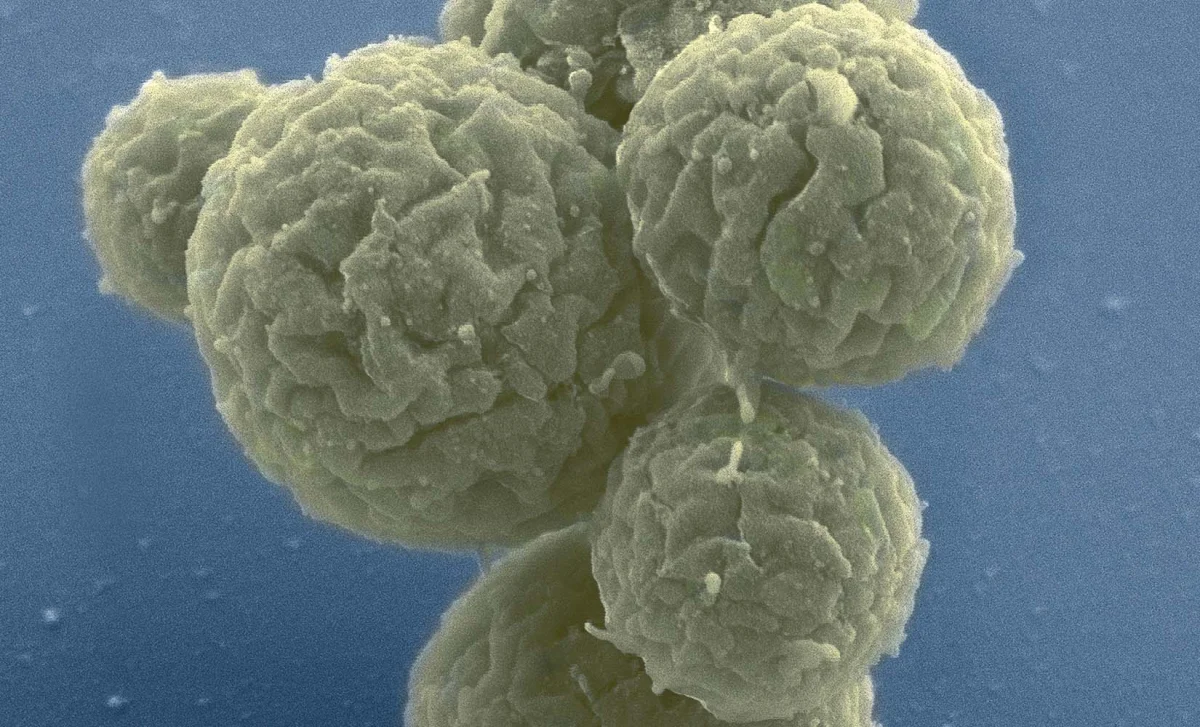
Other experiments test whether basic chemical materials can form structures that resemble early cell compartments. One team combined water and silica, then applied an electrical current to simulate lightning. The mixture formed a solid organic film made from polymers of hydrogen cyanide. The film contained small spheres that the researchers called protocells.
Those structures and their ingredients could plausibly have existed together in the distant past. Their formation does not demonstrate that they became living cells. Instead, the experiment offers a possible route by which simple chemicals could assemble into organized structures. Further chemical changes would be needed before such structures could perform the functions associated with life.
Jack Szostak, a Nobel Prize winning biologist at the University of Chicago, is among the researchers studying how RNA and cell boundaries might have contributed to the first cells. Adamala completed her graduate work in Szostak’s lab. His group works with structures enclosed by fatty acid membranes, with RNA inside, to approximate possible protocells.
Under suitable conditions, some of Szostak’s cell like structures can divide, with RNA distributed between the two resulting compartments. His lab has also made structures in which RNA can produce a copy of itself internally. More recently, the team has explored whether circular arrangements of RNA segments could offer clues about genetic replication. Szostak said the idea emerged through discussions among colleagues during the early months of the Covid 19 pandemic, when they could not work in the lab.
These experiments focus on parts of the problem rather than a complete organism. Researchers may show that a molecule can copy itself, that a membrane can divide, or that a chemical reaction can continue inside a compartment. The challenge is getting those activities to support one another without relying on an external supply of the machinery that makes them possible.
Sasselov has said the advance could arrive soon or take a decade. In his view, the limiting factor is not simply a larger lab or a more powerful computer. The necessary pieces may need to fit together in a way that researchers have not yet found. Progress depends on resolving many connected questions, including which chemicals can perform several jobs and how they can remain organized long enough to support a cell.
Two routes toward the same question
Origin of life researchers generally constrain their experiments to materials and conditions that could plausibly have existed on early Earth. Adamala’s synthetic biology work has a different purpose, so it can use tools that would not fit that reconstruction. Researchers can design proteins, assemble genetic sequences and use biological ingredients that already work, then ask how those parts function together.
The difference reflects what the teams want to learn. Origin focused work tries to identify plausible routes from early chemistry to the first cells. Synthetic biology asks how to build or modify a cell to understand its basic functions or perform a task. Both approaches study life by assembling its parts, but one places greater emphasis on historical plausibility while the other prioritizes control and function.
Sasselov sees the goals as connected. Researchers in both areas want to understand what life is and how its parts operate. He expects the two lines of work to overlap more as they develop. Methods created to build reliable synthetic systems may help origin focused researchers test chemical ideas, while discoveries about early chemistry may inform which parts synthetic systems need.
The overlap is already visible in the questions being asked. Which molecules can store information? What kind of boundary lets reactions occur while still exchanging materials with the environment? How can a system obtain energy, grow and reproduce? These questions matter whether the goal is to explain how life began or to design a cell for a specific purpose.
Many separate functions have been demonstrated in synthetic biological systems. Some can receive and respond to signals from their environment. Others communicate, make fats or protein building blocks, use energy, copy genetic material or produce mutations. SpudCell brings several functions together, but it still depends on components supplied from outside and does not maintain a fully self sustaining cycle.
Getting several processes into one structure changes the research challenge. A system can have a membrane, genetic material and chemical reactions without those parts supporting one another. A cell’s functions depend on coordination: Its components must act at the right time and place, provide materials for other processes and persist as the system grows and divides. Putting the pieces together is more demanding than showing that each piece can work separately.
Earlier synthetic genome work
J. Craig Venter helped establish a different line of work by sequencing an organism’s full genome and investigating what its genes do. In the 2000s, Venter and his collaborators created synthetic genomes for a virus and a bacterium. In 2010, they placed a genome designed on a computer and assembled from real DNA fragments into an existing living cell.
That achievement showed that a constructed genome could direct the activity of a cell that was already present. It did not create a cell from nonliving materials: The researchers used a preexisting cell as the recipient. That distinction remains central to the field’s goals. Researchers seeking a cell from scratch want to assemble its boundary, genetic material and working chemistry without relying on a living cell to supply the starting structure.
In 2016, Venter’s institute reported a minimal synthetic bacterial cell made by placing synthetic genetic material into an existing cell. The cell had 473 genes, but it divided irregularly, sometimes growing into an oversized form rather than splitting into similarly sized cells. In 2021, the group added 19 genes, including seven associated with cell division. The modified cell then divided more normally.
The results illustrate how difficult it can be to predict what a genome needs. A cell may contain a set of genes that appears sufficient for survival, yet still divide incorrectly because important interactions are not understood. Adding genes associated with division improved the outcome, but the work still began with a living cell. Venter said that one of his hopes was to build a synthetic cell more directly, without first replacing the genetic material in an existing one.
Venter died at the end of April at age 79. Before his death, he described possible future uses for synthetic cells, including making medicines, chemicals, building materials or food by giving cells genetic instructions. These are potential applications of more capable systems. The genome work that led to them shows how much can be learned from changing a cell’s instructions, while also underlining the gap between rewriting a living cell and constructing one from the ground up.
Could life use different chemistry?
Not all researchers begin with the chemistry found in familiar cells. Juan Pérez Mercader, a physicist and senior research fellow at Harvard, studies whether systems could display life like properties without using DNA, RNA, proteins, sugars or lipids. His starting point was mathematical: He developed equations to represent broad properties such as handling information, reproducing, changing over time and using energy.
Computer models based on those equations produced digital single celled systems that could swim. Pérez Mercader then asked whether chemistry could produce comparable behavior. He wanted to test whether the properties used to describe life depended on familiar biological ingredients or could arise from other materials arranged in a suitable way.
His group uses polymerization induced self assembly. The process starts with carbon based molecules that interact with water, along with carbon based monomers and molecules that respond to light. When light supplies energy, the ingredients link together into polymers. As the structures form, parts of the molecules that repel water turn inward, while water attracting parts face outward. This arrangement can produce small, fluid filled spheres called micelles.
The micelles can grow as more molecules link into their structure. Their internal pressure rises, and a portion can break away to form a new micelle. The newer structures may differ slightly from the originals, rather than being exact copies. The system also uses light as an energy source. Pérez Mercader interprets these features as versions of reproduction, variation and metabolism.
His group’s system brings several life like behaviors together without the molecular ingredients normally associated with biology. That makes it a test of whether life’s defining properties depend on a particular chemistry. It also makes the interpretation contested. A structure that grows, divides and uses energy may resemble a living system, but researchers may disagree about whether it meets their criteria for life.
There is no settled definition that resolves those disagreements. Many scientists look for reproduction, metabolism, response to the environment, maintenance of internal conditions and the capacity to evolve. Yet a candidate system may show only some of these traits, or display them in a form that differs from natural cells. The answer can depend on which features a researcher regards as essential.
Robert Dorit, a biologist at Smith College, has pointed out that research into life’s origins faces criticism from both directions. Some researchers are seen as assuming that life elsewhere must resemble Earth life. Others are challenged for considering chemistry that differs from the forms known here. Dorit argues that the definition should not be tied too tightly to familiar biology, while also suggesting that whether a laboratory creation is “alive” may be less revealing than what it teaches about living systems.
Any system created in a lab would have a different history from organisms shaped by billions of years of evolution. Studying unfamiliar structures could help clarify which properties arise from particular molecules and which can emerge from broader chemical principles. Pérez Mercader sees his work as evidence that life like organization may not require the familiar ingredients of Earth biology. That interpretation remains one position in an active scientific debate, not an agreed conclusion.
Measuring what counts
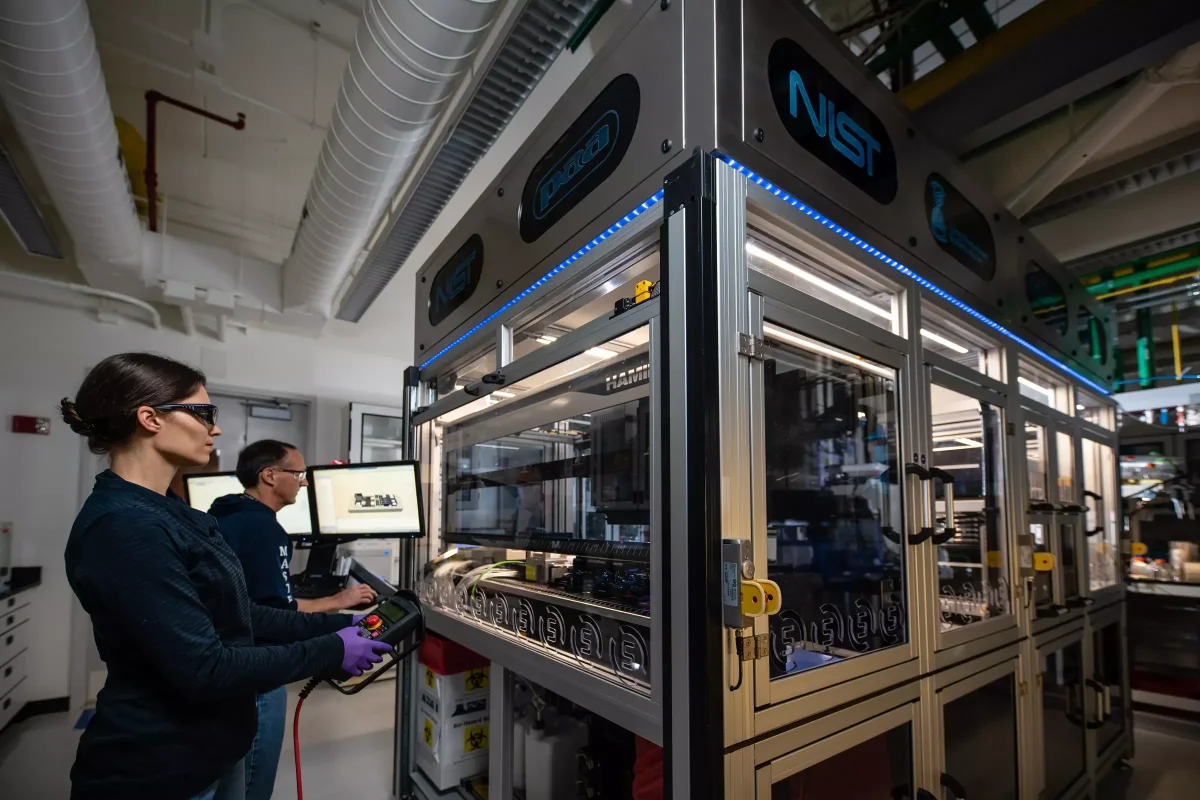
Defining life is also a practical measurement problem. Elizabeth Strychalski, who leads the Cellular Engineering Group at the National Institute of Standards and Technology, studies how to measure and troubleshoot engineered cells. Her group works on methods that can help researchers compare systems and determine which functions they perform.
Measuring a constructed biological system differs from measuring a material with fixed physical properties. The system is made from components that interact and change. Researchers need to know which observations can show whether a cell is growing, dividing, using energy or maintaining its internal conditions. They also need ways to tell whether a process continues independently or only works because researchers keep supplying a missing ingredient.
Strychalski has worked with Venter’s institute and attends Build a Cell, a research network that has brought cell building researchers together twice a year since 2017. Adamala organizes the meetings. Strychalski said the community includes researchers who are getting close to assembling living cells from nonliving materials. The shared obstacle is still integration: The parts need to work together on their own.
Reliable measurements could help researchers locate failures. If a system grows but does not divide, for example, teams need to know whether the problem lies in its membrane, energy supply, genetic instructions or another interaction. Common ways to describe performance could make results easier to compare across labs and clarify which capabilities remain incomplete.
Measurements could also help establish when a new system has crossed a meaningful threshold. There is no single test that settles the question of life, and a candidate would not announce itself in an obvious way. Strychalski has described the need to recognize when something alive, or alive in a new way, has been made, so researchers can respond appropriately.
The answer has consequences for safety as well as scientific classification. Adamala has said she plans to pursue safeguards as SpudCell improves. In a follow up email, she wrote that systems able to grow and divide more quickly and efficiently will need measures designed to prevent replication outside controlled settings. The current system’s limitations do not eliminate the need to consider how its capabilities could change.
Researchers have also raised concerns about a more distant possibility: mirror life. The molecules in known Earth life have consistent directional forms. For example, genetic material and amino acids in proteins have different handedness. Some scientists have begun exploring forms with the opposite orientation. A complete mirror cell remains a future prospect; the authors of a 2024 paper estimated that it could be at least a decade away.
Researchers who wrote that paper warned that mirror organisms could behave in ways that are difficult to manage, including potentially evading some natural defenses or spreading in environments where they have few checks. These concerns are about a hypothetical technology, not a demonstrated threat from current cell building work. The researchers’ discussion reflects an effort to consider possible consequences before such systems exist.
Adamala described a broad effort to pause work on creating mirror life. A UNESCO bioethics committee recommended a pause, and a group convened by the UK Office for Science recommended considering restrictions on mirror genomes able to reproduce themselves. These discussions show that some scientists are considering limits in advance of the technology.
Strychalski has also called attention to the possibility of accidental release and to the limited monitoring of lab spaces for engineered biological materials. Her concern reflects a wider question: As researchers make cell like systems more capable, what practices will help detect unexpected behavior and keep experiments contained?
The field’s next advances will likely come from combining capabilities and measuring them carefully. SpudCell shows that a system built from nonliving components can complete several stages of a cell cycle, but it still depends on supplied machinery and does not evolve independently. Origin focused experiments offer clues about how simpler chemical systems might have formed, while alternative chemistry tests whether life like behavior requires familiar biological molecules.
No single result has settled how life began or how to define it. The practical value of this work lies in the questions it can answer along the way: which components support a function, how separate processes become coordinated, and what safeguards are needed as systems gain new abilities. Researchers may learn a great deal about life before they can agree on whether they have made it.