Atopic Dermatitis: Six Health Issues to Discuss With Your Care Team
Atopic dermatitis can affect sleep, mental well-being and other parts of health. Here’s what the reported links mean and when to seek care.
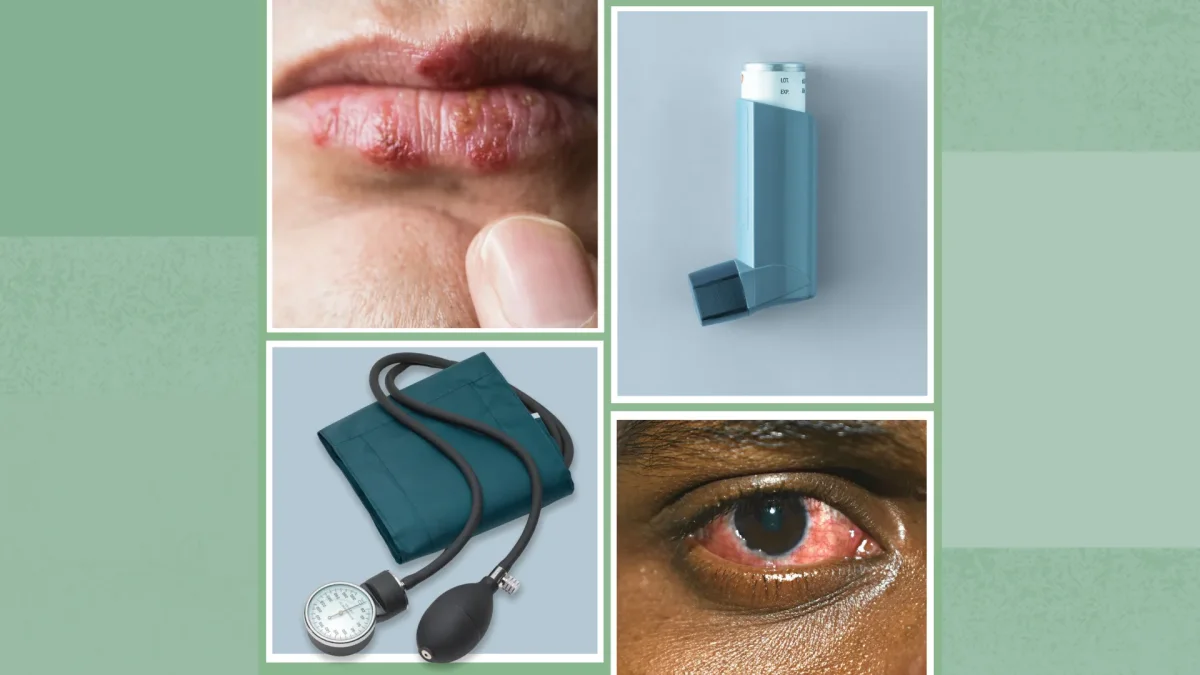
Atopic dermatitis (AD), a type of eczema, can affect more than the skin. Its persistent itch and inflammation may coincide with problems involving sleep, emotional well-being, the eyes, breathing and cardiovascular health. These connections matter when planning care, but they don’t mean that everyone with AD will develop these issues—or that AD alone explains them.
One reason AD can have wider effects is the skin barrier. Filaggrin is a protein that helps skin cells form a protective layer. When this barrier is impaired, skin can become dry and more vulnerable to irritants and microbes. Genetics and environmental factors can both contribute to AD. The source article also describes research in which about 40 percent of participants with AD developed rhinitis, an inflammatory condition affecting the nose, while 30 percent had suspected food allergies. Those figures come from a particular study and shouldn’t be treated as a forecast for every person with AD.
Skin infections
Cracked or inflamed skin can be more susceptible to infection. The article identifies staph infections, including impetigo, and eczema herpeticum, which is associated with the herpes simplex virus. Eczema herpeticum can become severe, so new or worsening skin symptoms are worth discussing promptly with a clinician. A clinician may take a skin sample to help identify a cause and guide treatment when an infection is suspected. The article does not provide a rate for these infections, and having AD does not mean an infection is present.
Asthma and allergies
AD can occur alongside asthma and allergies. The article reports that about 25 percent of people with AD also have asthma, and that children with AD are six times as likely to develop a food allergy as children without it. These statistics describe associations; they don’t establish that AD causes asthma or food allergy in an individual. They also don’t indicate that every child with AD needs allergy testing.
Breathing symptoms, suspected reactions to foods, or concerns about allergies are reasonable topics to raise with a health professional. Depending on the symptoms, a clinician may consider whether referral to an allergy or lung specialist is appropriate. Avoid drawing conclusions from skin symptoms alone.
Eye problems
Itchy eyes can lead to frequent rubbing, which may contribute to irritation and other eye problems. The source discusses conjunctivitis, commonly called pink eye, and keratoconus, a change in the cornea’s shape. It recommends prompt attention for eye symptoms and highlights vision loss, double vision, or red, crusty eyes as reasons to contact a doctor immediately. Because eye conditions can have different causes, an eye care professional can assess what is happening rather than assuming it is related to AD.
Mental well-being
Ongoing symptoms and the demands of managing a visible, itchy condition can affect mood and social life. The article describes anxiety, depression, isolation and, for some people, reliance on substances or other compulsive behaviors as possible concerns. These experiences aren’t a personal failing, and they deserve care alongside skin symptoms.
Counseling, peer support, meditation or relaxation training may help some people cope; the right approach depends on individual needs. If low mood, anxiety or coping behaviors are affecting daily life, mentioning them to a clinician can open a conversation about support. A dermatologist or primary care professional may help connect skin care with mental health care.
Sleep disruption
Intense itching can make it difficult to fall asleep or stay asleep. Repeated poor sleep may then affect concentration, work, relationships and mood, adding to the burden of AD. The article describes controlling itch as central to improving sleep, but treatment choices should be discussed with a clinician. It lists several possible categories of treatment, including topical and systemic medicines, antihistamines and sleep medicines; their suitability varies, and the source does not establish that any one option is right for a particular person.
If sleep remains poor, describe how often it happens and how it affects the day. A clinician can review the AD symptoms and consider whether additional support, such as a sleep specialist or therapist, may be useful.
Cardiovascular health
The article reports research linking AD in adults with higher risks of some cardiovascular complications, including deep vein thrombosis. It says the reported risks were higher among adults with severe AD and also describes smaller increases in cerebrovascular events, diabetes and cholesterol imbalances. Adults with severe disease had higher risks of heart attack and pulmonary embolism in the research it cites.
The article doesn’t give the study’s sample size, design, or absolute risk figures, so these findings can’t show how likely an individual is to experience a complication. An observed link also doesn’t prove that AD inflammation directly causes heart or blood vessel problems. Discussing personal cardiovascular risk and routine screening with a clinician can put the research into context.
What to bring to an appointment
A clear account of symptoms can help a care team see the whole picture. The article recommends tracking when flare-ups occur, how often they happen, how severe the itch feels and what other health concerns arise. Note changes in sleep, mood, breathing, eyes or skin that seem relevant, and bring questions about symptoms that are persistent or worsening.
As dermatologist Jonathan Silverberg notes in the source, people may remain at a level of discomfort without asking whether their care could be improved. For people living with AD, the practical takeaway is to mention changes beyond the skin and ask what they may mean. These connections merit attention, while individual risks and care decisions depend on a clinician’s assessment.