Holiday Meals on GLP-1 Drugs: Tips for Comfort and Nausea
GLP-1 drugs can make rich holiday meals harder to tolerate. Smaller portions, slower eating and attention to symptoms may help.
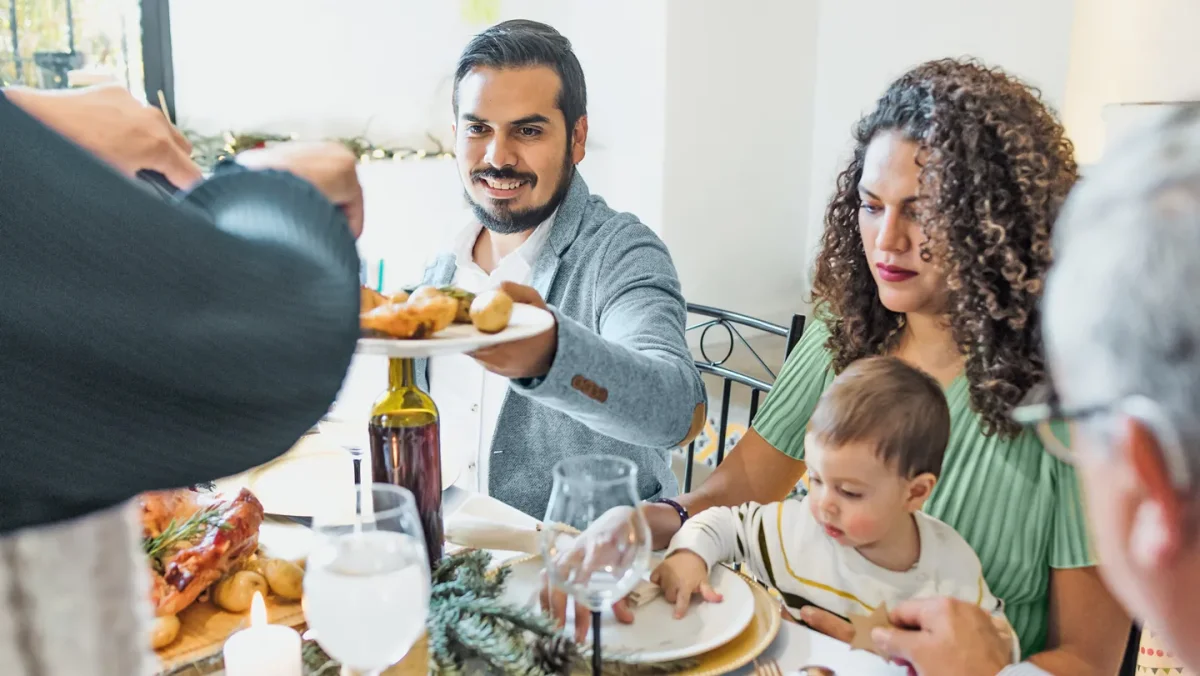
Holiday meals can still include favorite foods for people taking GLP-1 medicines, but large portions and rich dishes may be harder to tolerate. These medicines slow stomach emptying, so food can stay in the stomach longer. Eating as before treatment may lead to earlier fullness, bloating or nausea, particularly when a meal is high in fat or served in generous portions.
That doesn’t mean a person needs to avoid every traditional dish. The practical goal is to notice fullness, choose portions deliberately and avoid piling several potential symptom triggers into one meal. The advice below comes from clinicians who treat people using these medicines; individual experiences can differ.
Why a large meal can feel different
GLP-1 medicines include drugs such as Ozempic, Wegovy and Foundayo. Mounjaro and Zepbound also act on GIP hormone receptors. By slowing stomach emptying, these treatments can change how quickly a person feels full and how long a meal sits in the stomach.
Holiday menus often combine large servings with foods that are rich in fat, such as gravy, creamy sauces and fried dishes. That mix may intensify nausea, reflux or bloating for some people. A person may also find that a familiar portion now feels like too much. The response can vary, so paying attention to personal symptoms matters more than following a rigid menu.
Slow down and build a satisfying plate
Clinicians recommend eating at a measured pace, taking smaller bites and pausing during the meal. One approach is to stop when about half the plate is finished and check in: Does the food still feel comfortable? Is fullness already setting in? If so, there’s no need to finish everything. If not, a person can continue slowly and reassess.
Mindful eating also means making room to enjoy the meal without grazing throughout the day. Protein and vegetables can make up much of the plate; clinicians cited in the source say these foods can be satisfying and help stabilize blood sugar. Starchy sides and desserts don’t have to be entirely off the menu. A smaller serving of a favorite food can offer a taste without making the meal feel like a challenge. As endocrinologist Rashika Bansal puts it, “Think taste, not plateful.”
These are general suggestions rather than a required eating plan. A person with specific nutrition needs or questions about blood sugar can discuss meal choices with their clinician or dietitian.
Notice foods and drinks that may trigger symptoms
High-fat dishes, heavy dairy and sugary desserts are common sources of discomfort for some people taking GLP-1 medicines. Because the medicines already slow digestion, these foods may add to nausea or reflux. Carbonated drinks can increase bloating, and alcohol may contribute to bloating or other unpleasant symptoms.
Combining several triggers in one sitting may be more difficult than choosing a modest amount of one favorite item. People don’t respond identically, though, so it can help to notice which foods tend to cause symptoms personally.
Alcohol may also feel different during treatment. Some people have less interest in drinking; others may find alcohol affects them sooner, particularly if they are eating less. It can worsen nausea or dizziness. For those who choose to drink, the clinicians suggest sipping slowly, having it with food and avoiding sugary cocktails. Bansal suggests limiting intake to one drink, if drinking at all. The source also notes the World Health Organization’s guidance that drinking less, or not drinking, is better for health.
Handle pressure to eat more
Holiday gatherings can bring friendly pressure to sample every dish. Mir Ali, a bariatric surgeon, describes this as a difficult part of holiday meals for some patients. Trying smaller tastes can help people participate without taking portions that feel uncomfortable.
It’s also reasonable to decline food. No one owes an explanation. For someone who wants to share why they’re eating less, Bansal suggests a simple response: “I love this, but my stomach fills up fast on my medication.” Someone who prefers not to discuss treatment can keep a drink or small plate in hand to reduce repeated offers.
If discomfort follows a meal
If fullness or nausea develops, stop eating and give the stomach time to settle. Bansal suggests sipping water or ginger tea, taking a slow walk and avoiding lying down. Vedala recommends tiny, bland meals for the rest of the day. These steps may help with mild discomfort, but severe or persistent symptoms need medical attention.
Contact the prescribing clinician if nausea is severe or doesn’t ease; they can advise whether further care or an anti-nausea medicine is appropriate. Seek medical help promptly for vomiting that won’t stop, severe stomach pain that persists—especially pain spreading to the back—or abdominal swelling together with constipation.
The useful takeaway is to let current fullness and comfort guide the meal. Smaller portions, pauses and awareness of personal triggers may make holiday eating easier, while a clinician can help address symptoms that are intense, persistent or unusual.