Menopause Hot Flashes and Night Sweats: Effects on Work, Sleep, and Relationships
Hot flashes and night sweats can affect sleep, mood, work, and intimacy. Practical strategies and a clinician’s guidance may help manage them.
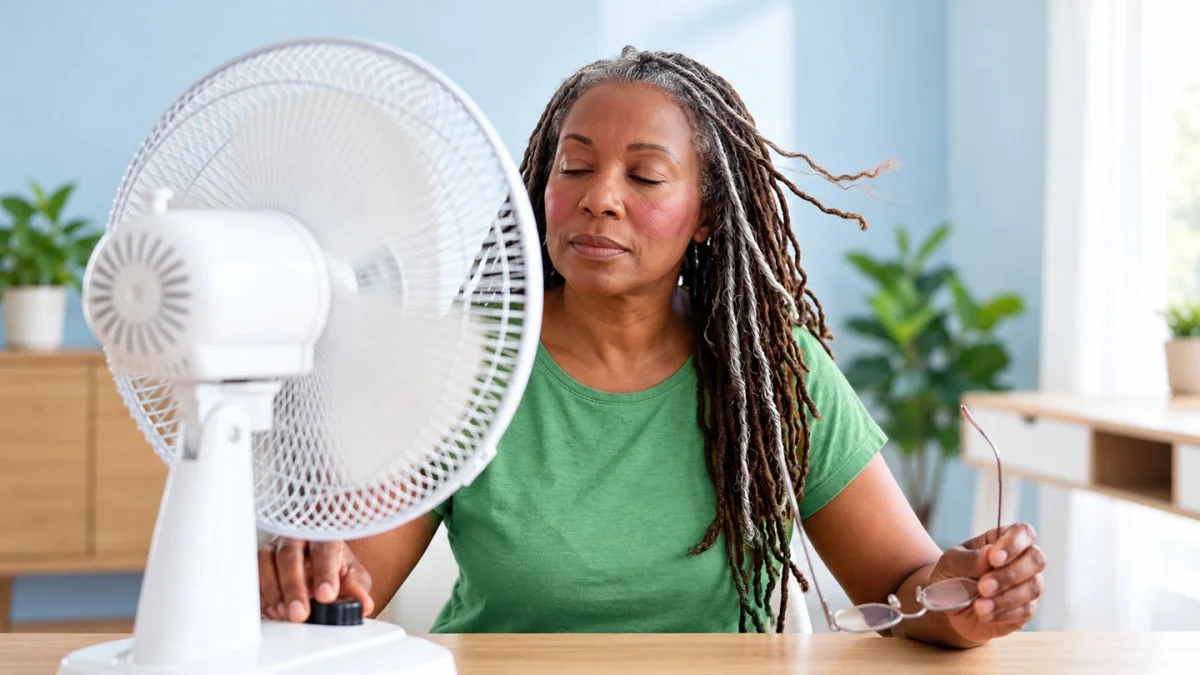
Hot flashes and night sweats can reach beyond physical discomfort, disrupting sleep, concentration, mood, work, and intimacy. These symptoms, known as vasomotor symptoms (VMS), affect up to 80 percent of women during menopause. Their effects vary: some people find them manageable, while others say they interfere with daily life. If symptoms are affecting your well-being, discussing them with a healthcare provider can help clarify possible treatments and practical ways to cope.
Sleep and mood can reinforce each other
Night sweats and hot flashes can cause brief awakenings that interrupt normal sleep cycles. Over time, poor sleep may contribute to irritability, stress, anxiety, or low mood. Stress can also make symptoms feel worse, creating a cycle that may be difficult to break.
A short daily record may help you spot patterns. Note when symptoms occur, how intense they feel, and how your mood and sleep are affected. You might notice, for example, that irritability follows a night of frequent sweats, or that a particular drink seems to precede a hot flash. Sharing those observations with a clinician can help guide a conversation about care. Susan E. Loeb-Zeitlin, MD, an obstetrician-gynecologist and director of the Weill Cornell Medicine Women’s Midlife Center in New York City, recommends tracking possible triggers.
Cognitive behavioral therapy (CBT), a form of talk therapy that works with thought patterns and behaviors, may offer short-term relief for VMS, insomnia, and depressive symptoms in people going through perimenopause or menopause. Mindfulness approaches, including meditation and body scanning, may also help ease stress, anxiety, and depressive symptoms and improve sleep quality. These findings suggest options to discuss with a healthcare provider; they don’t establish that any approach will work for everyone.
VMS can affect workdays
A hot flash during a meeting or presentation can be distracting, while sleep disrupted by night sweats may leave someone tired and less able to focus the next day. In a report in Mayo Clinic Proceedings, 13 percent of women ages 45 to 60 had an adverse work outcome related to menopause symptoms, and about 11 percent missed work because of them. Those figures describe the study’s participants; they don’t predict what any one person will experience.
Some everyday adjustments may make symptoms easier to manage at work. Dressing in layers can make it simpler to cool down, and breathable fabrics such as cotton, linen, or bamboo may allow more air to circulate than polyester, nylon, or acrylic. If caffeine or spicy foods seem to trigger symptoms, tracking their relationship to hot flashes may help you decide what to discuss with your clinician.
When a hot flash begins, slow, steady breathing may help you relax. One pattern described in the source is to breathe in through the nose for four counts, hold for seven, then breathe out through the mouth for eight. A brisk walk during the day may also help some people: research suggests regular, moderate-intensity exercise can reduce the frequency and severity of hot flashes. The effects can differ, so these strategies are best viewed as options to try rather than guaranteed relief.
People may also find it useful to talk with a manager about adjustments, such as a desk near a window or flexibility to work from home when symptoms are severe. Loeb-Zeitlin encourages people to advocate for themselves and take time off when needed. Whether to share personal health information at work is an individual decision.
Intimacy and comfort at home
Symptoms can affect relationships as well as sleep and work. Feeling sweaty, tired, stressed, or irritable may reduce interest in sex or other forms of closeness. A partner may not understand what’s happening, and sharing a bed can become uncomfortable if body heat seems to trigger hot flashes.
Talking openly can help prevent misunderstandings. It may be useful to explain what symptoms you’re experiencing and what you’ve discussed with a clinician. A cooler bedroom, a fan directed toward your side of the bed, and sleepwear or sheets made from natural fibers may help with nighttime comfort.
Vaginal dryness or discomfort during sex can also affect intimacy. Water-based lubricants and vaginal moisturizers may help; the source advises choosing a pH-balanced moisturizer. Silicone-based lubricants are another option to consider. If nonhormonal products don’t provide enough relief, ask a clinician whether vaginal estrogen is appropriate. A healthcare provider can help weigh options based on your symptoms and health history.
Finding care that fits
A primary care clinician or gynecologist can be a starting point for discussing VMS and possible treatments, including hormone therapy or antidepressant medication. These treatments aren’t right for everyone, and a provider can explain potential benefits and risks in light of an individual’s circumstances. If you feel your concerns aren’t being addressed, or you don’t have a regular clinician, consider seeking someone with menopause expertise. The Menopause Society offers a directory of healthcare practitioners; Loeb-Zeitlin recommends looking for a provider certified by the organization.
Symptoms that affect sleep, mood, work, or relationships are worth raising in a healthcare visit. A brief symptom record can make the conversation more specific, and a clinician can help you consider which treatment or coping strategies fit your needs.