Bedtime Stacking May Make It Harder to Associate Bed With Sleep
Bedtime routines can help you unwind, but doing tasks and using screens in bed may keep your brain alert. Experts suggest moving the routine elsewhere.
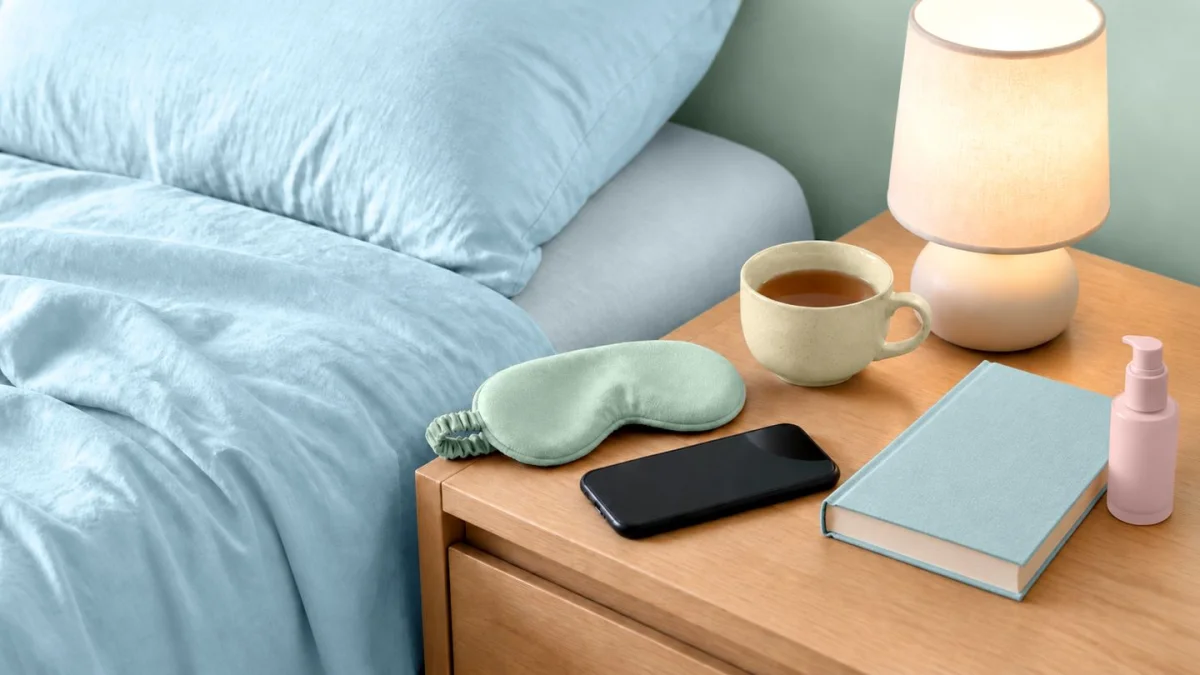
Bedtime stacking turns the bed into a place for several activities at once: skincare, journaling, reading, snacks, videos, or getting things done. The appeal is clear—you can settle in early and avoid repeatedly getting up. But sleep specialists say the location can work against the goal. When the bed becomes a cue for activity, it may become harder to treat it as a cue for sleep.
The activities themselves aren’t necessarily a problem. A cup of tea, a book, or a few minutes of journaling may feel calming. The concern is building a long, stimulating routine in bed, especially one that includes screens or tasks that keep your attention switched on. For people already struggling to fall asleep, that distinction may matter.
What bedtime stacking involves
The trend took off on social media, where TikToker Linnéa Pham posted a video showing a collection of items she brought to bed, including hand cream, a lip mask, snacks, a journal, a book, an iPad, water, and a neck massager. The video has more than 486,000 views. Other creators have shown routines involving tea, sleep supplements, lavender spray, e-readers, red-light therapy masks, scalp massagers, and face tape.
The aim is to have what you need close at hand and accomplish more without getting up. That makes the routine a more active version of “bed rotting,” the social media term for spending a long time in bed doing very little. The name may also call to mind habit stacking, a productivity technique popularized by writer James Clear in which someone pairs a new behavior with an existing habit. The social media trend doesn’t have one fixed routine; its contents depend on what each person hopes to do.
Why the bed’s role matters
Sleep specialists often recommend reserving the bed for sleep and sex. That guidance reflects a basic principle used in cognitive behavioral therapy for insomnia, or CBT-I: strengthen the association between bed and sleep. CBT-I is a short-term talk therapy considered a first-line treatment for insomnia.
Spending long stretches awake in bed can blur that association. A person who regularly works, eats, or watches TV there may begin to connect the bed with being alert and occupied. That can make it more difficult to fall asleep, or to return to sleep after waking during the night. Sleep psychologist Jennifer Caspari says that the more time someone spends awake in bed, the more the brain can learn to treat the bed as a signal for wakefulness.
Neal Walia, a sleep medicine physician at UCLA Health, says some of his patients describe insomnia beginning around the time they started doing more activities in bed. The pattern doesn’t establish that those activities caused their sleep problems, but it illustrates why sleep clinicians pay attention to what people do in bed and how long they remain awake there.
Persistent insufficient sleep has been linked with health concerns. An umbrella review cited in the source connected consistently sleeping fewer than seven hours a night with higher chances of high blood pressure, type 2 diabetes, obesity, anxiety, depression, stroke, and heart disease. Those links do not show that bedtime stacking itself causes these conditions. They underline why ongoing sleep difficulty is worth taking seriously.
Tasks and screens can delay sleep
A bedtime stack can stretch into a small work session. If the activities feel demanding or stressful, they may leave the mind activated when it’s time to sleep. Even enjoyable tasks can keep someone focused on completing one more item instead of winding down. A later sleep onset can reduce total sleep time when morning responsibilities still require getting up at a set time.
Research has also associated putting off bedtime with poorer sleep health, including less restorative sleep. The practical question is whether the routine helps someone feel relaxed or encourages them to stay up and keep doing things. A pre-sleep period is generally better suited to calming activities than to emails or other tasks that feel like work.
Screens add another consideration. Light from phones, tablets, and laptops can signal wakefulness to the brain and affect circadian rhythms, the body’s timing system. Walia notes that light exposure may suppress melatonin at a time when it normally rises to support sleep.
In a study of university students in Norway, each extra hour of screen use after going to bed was associated with a 59 percent higher chance of insomnia symptoms that night and 24 fewer minutes of rest. The study found an association, not proof that screen use caused those outcomes. One of its authors was employed by a company that makes a sleep-tracking app, a detail to keep in mind when interpreting the findings.
Keep the wind-down routine, change the setting
People who enjoy a bedtime stack can keep the soothing parts and move them to a chair or couch. Caspari suggests setting aside 30 to 60 minutes before bed for preferred wind-down activities outside the bed. Once sleepiness sets in, a person can move to bed and, if helpful, read or journal without a screen.
It may also help to keep the routine simple. Reading, journaling, meditation, or gentle stretching can feel relaxing for some people; answering email or tackling a list of unfinished tasks may have the opposite effect. The right choice depends on whether an activity helps the mind settle.
Keeping screens out of the bedroom can be difficult, but charging a phone in another room or placing it across the room may make it less tempting to keep scrolling. General guidance is to finish screen use 30 to 60 minutes before bedtime. A basic alarm clock can help reduce reliance on a phone beside the bed.
Relaxing before sleep can be part of a useful routine. The key takeaway from sleep specialists is to do most of that relaxing outside the bed, then use the bed as a place to sleep. If sleep problems persist or affect daily life, a conversation with a doctor or qualified sleep professional can help identify appropriate next steps.