Tardive Dyskinesia and Anxiety: Seven Ways to Cope in Daily Life
Practical coping techniques can ease anxiety around tardive dyskinesia and help people stay engaged in activities that matter to them.
When tardive dyskinesia (TD) causes unwanted, repetitive movements, anxiety can grow around being seen, losing control, or wondering when a movement will happen. That worry can draw more attention to the movements, making them feel more prominent and feeding further distress. Psychologists and psychiatrists quoted here suggest practical ways to calm the body, redirect attention and remain involved in daily activities.
These approaches are coping tools, not treatments for TD itself. They may help someone manage an anxious moment, while a health care provider can discuss ongoing symptoms and additional support.
1. Slow the breath gently
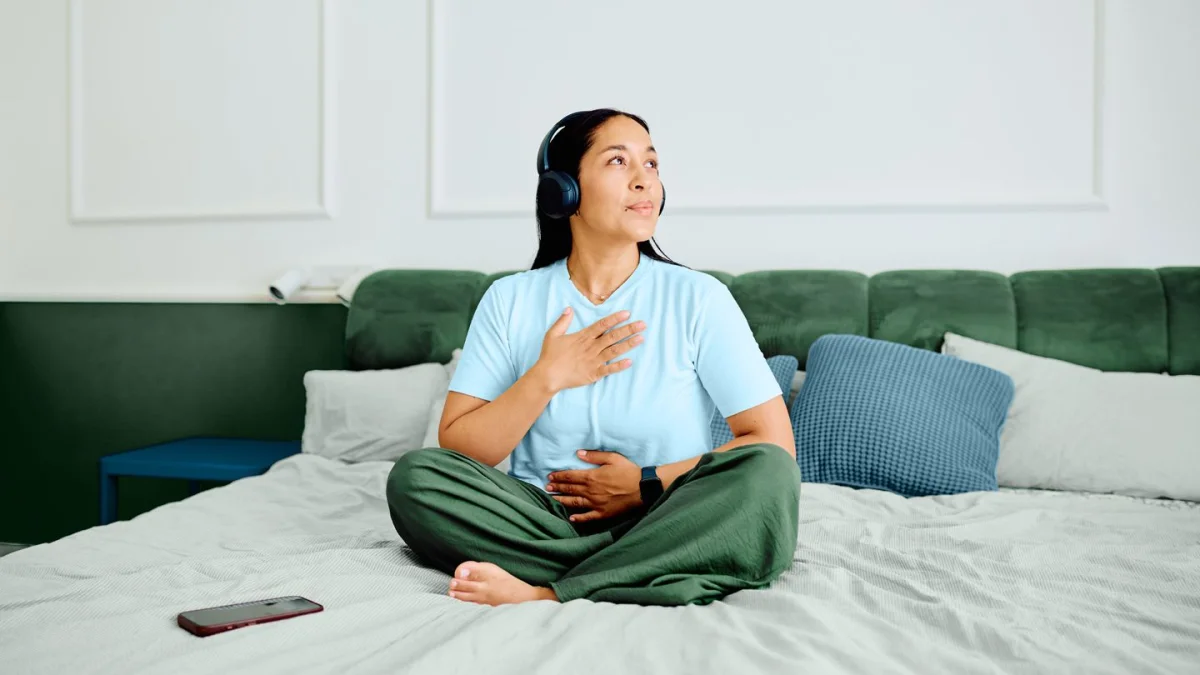
Diaphragmatic, or belly, breathing can help the body settle. Rest a hand on the abdomen and breathe in comfortably through the nose for about three to four seconds, allowing the abdomen and hand to rise. Then exhale through gently pursed lips for about four to five seconds. Try this for 30 to 60 seconds.
The aim is an easy, slower rhythm, not the deepest breath possible. Breathing too deeply or quickly can sometimes bring on lightheadedness or more anxiety, says Taylor Rush, PhD, a psychologist at Cleveland Clinic.
2. Ground attention in the present
Grounding shifts focus from anticipated movements or anxious thoughts to what is happening now. One option is to picture a calming place or scene. Molly (Mary) Conlon, MD, an attending psychiatrist at Northwell Health’s Zucker Hillside Hospital, says positive imagery can help direct attention toward the present and away from TD movements.
A sensory exercise is another option: identify one thing you can see, hear, smell, touch and taste. Or choose a sense that feels especially soothing. That might mean listening to gentle music, holding a soft object, using a fidget toy, smelling lavender or tasting a small piece of chocolate. Keeping a preferred item or activity accessible can make it easier to use when anxiety rises.
3. Turn to a purposeful activity
Engaging with something absorbing may ease distress and reduce close monitoring of movements. Greg Iannuzzi, MD, a psychiatrist at the University of South Florida, says attention to another activity can sometimes help with awareness of the movements as well as the discomfort around them. Rush describes purposeful distraction as a reminder that the movements don’t need constant attention.
Possible activities include listening to a podcast, doing a puzzle, gardening, cooking, drawing, knitting, playing a game, talking with a friend, taking a walk or trying yoga poses. The useful choice is personal: it should feel accessible and hold your attention without adding pressure.
4. Release muscle tension
Anxiety can leave the body feeling tense and on alert. Progressive muscle relaxation involves gently tightening and then relaxing muscle groups one at a time. You can begin with the muscles around your eyes and eyebrows, then move through your shoulders, chest and arms, continuing down toward your toes. Conlon says this sequence can help release tension and shift attention from TD.
Keep the tightening comfortable. The purpose is to notice the difference between tension and release, not to strain.
5. Answer anxious thoughts with facts
Worry can quickly turn into assumptions such as “Everyone is looking at me” or “I have to make this stop.” Rush suggests preparing brief, realistic phrases to use when that happens. Examples include: “I notice the movement, but I don’t have to fight it”; “This is uncomfortable, and I can continue what I’m doing”; or “I don’t know what other people are thinking, and I don’t need to figure it out.”
A phrase such as “This is uncomfortable, not an emergency” can also help replace a threat focused interpretation with a more balanced one. It doesn’t need to make anxiety disappear to be useful; it can offer a steadier thought to return to.
6. Plan for anxiety in public
Having a few options ready may make it easier to stay in a social setting when anxiety spikes. In a checkout line, for example, Rush suggests pressing the feet into the floor, breathing out slowly for about six seconds and naming three things in view. At a restaurant, someone might step away briefly, rinse their hands with cool water, take several slow breaths and return when ready.
The aim is to lower distress enough to continue an activity when that feels manageable. Repeatedly avoiding public situations may make them seem harder to face over time, Rush says. A plan gives someone a choice in the moment rather than making anxiety the sole reason to leave.
7. Stay connected and ask for support
Isolation can add to anxiety. Friends and family may help by responding calmly to movements or not drawing attention to them, depending on what the person prefers. A virtual TD support group through the National Organization for Tardive Dyskinesia is another possible source of connection.
For more help building coping skills, ask a health care provider about psychotherapy, including cognitive behavioral therapy (CBT). A provider can also discuss other mental health support. If distress feels overwhelming and immediate support is needed in the United States, call or text 988; the Crisis Text Line is also available by texting HOME to 741741.
TD related anxiety can affect social life, but it doesn’t have to be managed alone. Small strategies, a prepared plan and support from people who understand can help make daily activities feel more manageable.